
The Canals of Falkirk: Linking Seas and Shaping a Town
- Gavin Divers
- Aug 30, 2025
- 2 min read
Few towns in Scotland can claim such a powerful link to the nation’s waterways as Falkirk. The meeting point of the Union Canal and the Forth & Clyde Canal made the town a hub of transport, trade, and engineering during the 18th and 19th centuries. These waterways not only transformed Falkirk’s economy but also left a lasting legacy on its landscape.
The Forth & Clyde Canal
Opened in 1790, the Forth & Clyde Canal stretched across Scotland, linking the River Forth with the River Clyde. Running through Falkirk, it allowed goods and raw materials to move quickly between east and west, fuelling Scotland’s industrial revolution. Coal, iron, and timber all passed through its locks.
The Union Canal
Completed in 1822, the Union Canal connected Falkirk directly with Edinburgh. This cut journey times dramatically, bringing the capital’s markets and opportunities closer. For over a century, barges plied the route, making Falkirk a critical crossroads of Scottish commerce.
Life Along the Water
The canals brought more than trade. Communities grew along their banks, with boatmen, lock-keepers, and merchants shaping the town’s social life. Inns, stables, and workshops sprung up to support canal traffic. For many families, the canals were a way of life.
The Canals Today
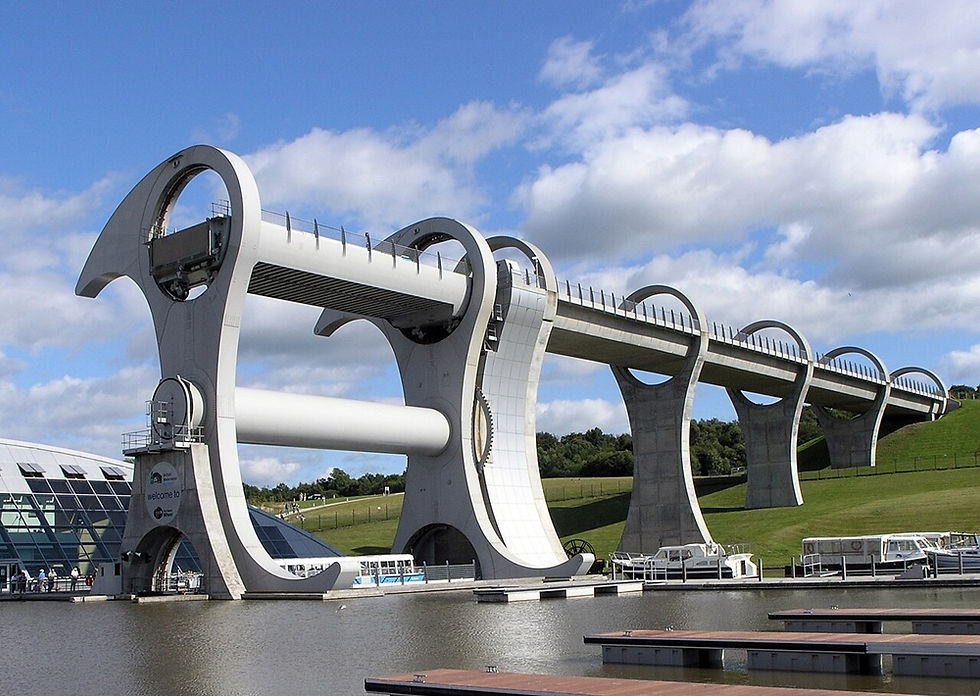
Though commercial use declined in the 20th century, the canals have been reborn for leisure. Walking and cycling paths follow their routes, and the spectacular Falkirk Wheel now links the two canals in a feat of modern engineering. Today, they remain one of the best ways to explore the town’s heritage and green spaces.
Discover Falkirk walking tours follow stretches of these waterways, telling the stories of the people and industries that grew along their banks.
Step onto the towpath and uncover how canals shaped Falkirk’s past and present.


Comments